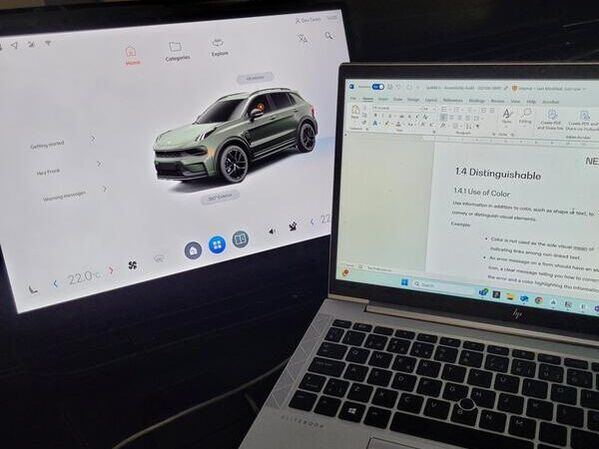

Lynk & Co faced the challenge of ensuring their suite of in-car applications met the stringent requirements of the European Accessibility Act (EAA) and WCAG 2.2 (AA) standards. Another challenge was the unprecedented nature of the audit, which was that there was no established framework existed for this kind of audit,
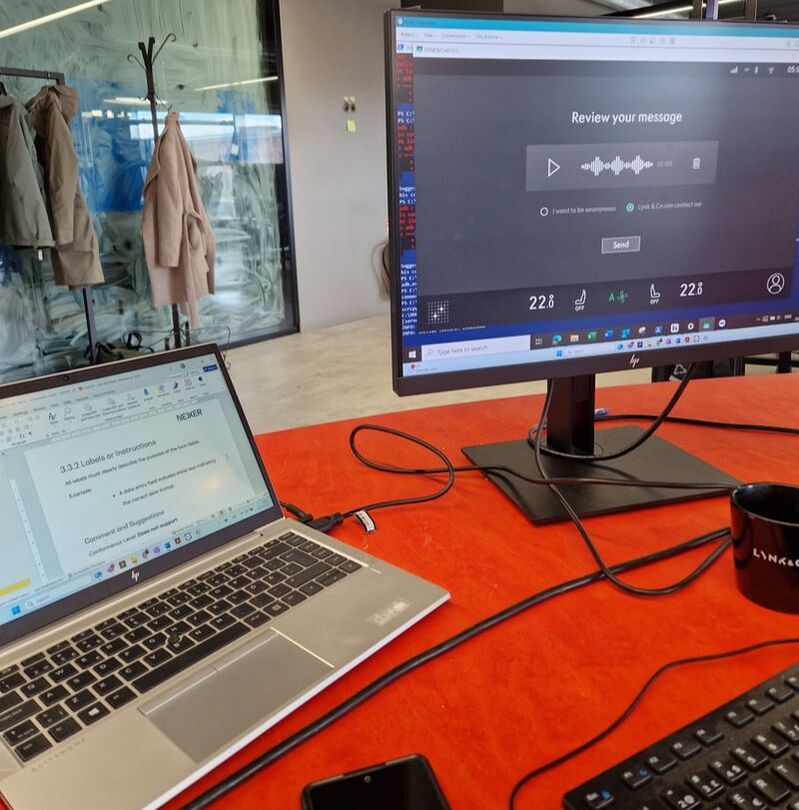
Given the specific nature of this accessibility audit, our first step was to identify and adapt relevant WCAG 2.2 (AA) criteria, determining which were applicable and how they could be effectively tested within the unique in-car environment. With a cohesive and tailored audit process established, our team then conducted a thorough accessibility assessment of Lynk & Co's in-car applications, aligning with both WCAG 2.2 (AA) and EAA standards. Throughout this process, we identified, documented, and ranked all existing accessibility issues by severity and user impact. Furthermore, we provided a prioritized action list with clear, step-by-step remediation recommendations, simultaneously supporting Lynk & Co in developing their internal capabilities for sustained accessibility and ensuring their digital assets met all current and upcoming legal requirements.
We started with a kick-off workshop to align on goals and connect them to Lynk & Co’s accessibility vision. A legal review then identified which in-car apps were most impacted, guiding our prioritization.
Comprehensive Accessibility Audit
Our team performed in-depth audits using a combination of manual and automated (when possible) testing. This approach allowed us to thoroughly assess applications across various operating platforms and inspect user interfaces in detail.
Actionable Reporting & Remediation Strategy
Collaboration & Knowledge Transfer
Throughout the project, we maintained close communication with Lynk & Co's stakeholders, ensuring continuous feedback and knowledge transfer. We also assisted in providing relevant information for their public accessibility statement, ensuring transparency and accountability.
I gained several valuable insights from this assignment.
I learned that when it comes to accessibility, it is essential to engage with its requirements early in the development lifecycle, rather than as a post-launch audit, which significantly reduces redesign effort and costs.
In-car apps present distinct challenges compared to traditional web or mobile applications. A deep understanding of the operating systems (e.g., Android Automotive, QNX), and hardware integrations is crucial for effective auditing.
I also learned that it is essential to have close, ongoing collaboration between accessibility experts, UX designers, developers, and product managers to ensure that our recommendations are practical, implementable, and integrated seamlessly into existing workflows.